
The Silent Toll of Rising Heat
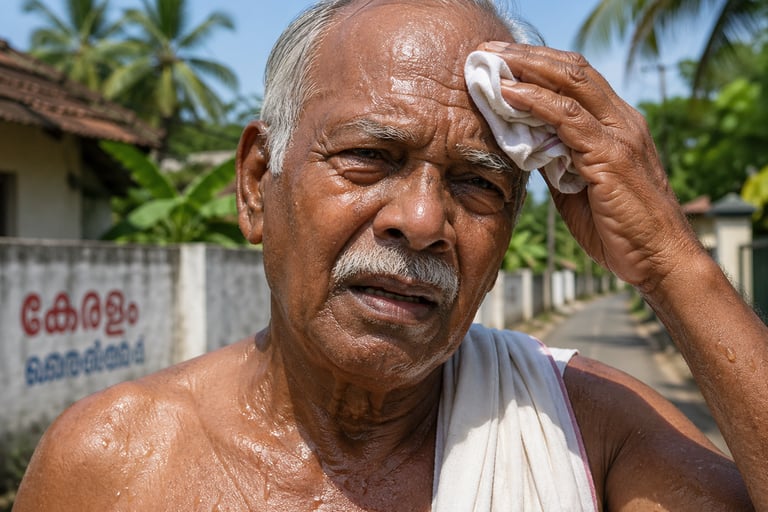
A Wake-Up Call from Kerala’s Summer
PUBLIC HEALTH
4/29/20263 min read
This Easter season felt different. In years past, the post-Lenten period would see my calendar filled with wedding invitations — joyous celebrations of new beginnings. After the 50 days of fasting, families eagerly schedule weddings since there are no restrictions on serving non-vegetarian food at celebrations. But this year, instead of attending 4–5 weddings as usual, I found myself at 4–5 funerals within just 1–2 months.
Most of those who passed were elderly relatives with existing health conditions — diabetes, heart disease, kidney problems. While their illnesses weren’t new, the clustering of these deaths in such a short time struck me as unusual. It made me wonder: could Kerala’s increasingly extreme summer heat be playing a silent but deadly role?
The Heat We Can’t Ignore
Living in Central Kerala for the past six years, I’ve felt it in my bones — each summer seems hotter than the last. The data confirms that this isn’t just perception:
2024’s summer recorded a temperature anomaly of +1.13°C, making it the second-warmest summer since 1901
April 2024 saw temperatures +1.74°C above normal — the highest in 123 years
This March (2026), Thiruvananthapuram hit a historic 37.8°C, breaking a 38-year-old record
Over the past century, Kerala’s average temperature has risen by 1.15°C, with nine of the ten warmest years occurring between 2014 and 2024.
The Obvious Dangers: Heat Stroke and Exhaustion
We all know extreme heat can kill directly. When our body’s core temperature crosses 40°C (104°F), we risk heat stroke — a medical emergency that can cause:
Confusion, delirium, or loss of consciousness
Multi-organ failure affecting the heart, kidneys, and lungs
Death, if not treated immediately
Even before reaching that point, many experience heat exhaustion: severe headaches, dizziness, nausea, and extreme fatigue.
The Hidden Killer: How Heat Attacks Those Already Vulnerable
But here’s what many don’t realize — and what likely contributed to the deaths I witnessed this summer:
Heat doesn’t just cause heat stroke. It silently worsens existing diseases.
When temperatures rise, our body works overtime to cool itself. This puts enormous strain on:
The heart: trying to pump more blood to the skin to release heat
The kidneys: struggling to maintain fluid balance
The lungs: working harder in hot, often humid air
For someone already living with heart disease, diabetes, or kidney problems, this added stress can be the tipping point. Research shows that:
Every 1°C increase in temperature leads to an 18% rise in heat-related illness and a 35% rise in mortality
The elderly and those with chronic diseases face the highest risk
Even day-to-day temperature swings make it harder for vulnerable bodies to adapt
What appears as a “natural death” from heart attack, stroke, or kidney failure may actually be heat-triggered.
Why This Matters to All of Us
Kerala’s climate is changing rapidly. Projections suggest we’ll see at least another 1°C increase by mid-century. That’s not some distant future — it’s within our children’s lifetime.
The funerals I attended weren’t isolated tragedies. They’re part of a pattern we’re only beginning to recognize — a pattern where rising temperatures are claiming lives, not always through dramatic heat strokes, but through the quiet worsening of conditions our loved ones were already managing.
What Can We Do?
For ourselves and our families:
Stay hydrated — drink water even before feeling thirsty
Avoid direct sun exposure between 11 AM and 4 PM
Use fans, air conditioning, or wet cloths to stay cool
Wear light, loose-fitting clothes
Check on elderly relatives and neighbors, especially those living alone
For our vulnerable loved ones:
Ensure they take medications regularly (some worsen heat sensitivity)
Monitor for signs of confusion, unusual fatigue, or reduced urination
Keep their living spaces cool
Encourage frequent rest breaks if they must go out
For our community:
Plant trees to create shade
Advocate for cooling centers in public spaces
Support climate-conscious policies
Share information about heat risks with others
The weddings I missed this year will happen next year, hopefully. But the funerals I attended remind me that for some, there is no next year. As our summers grow hotter, we need to recognize that extreme heat isn’t just about discomfort — it’s a serious public health threat, especially for our most vulnerable.
Let’s not wait until we all have similar stories to tell. Let’s act now to protect ourselves, our families, and our community from the rising toll of climbing temperatures.
Joe Abraham
Sharing thoughts on books, films, travels and public health.
© 2025. Joe Abraham. All rights reserved.